Home / Articles
Breast Augmentation Before/After: Safety, Risks & Final Results
Home / Articles
Breast Augmentation Before/After: Safety, Risks & Final Results
This guide provides a transparent look at what happens before, during, and after surgery. By balancing aesthetic desires with medical safety, you can make an informed decision that ensures the best possible results for your body.
Every body is unique, which is why there is no one-size-fits-all approach to breast implants. During your consultation, you will discuss materials, shapes, and placement with your surgeon.
The most common choice today is the silicone gel implant. These are often called gummy bear implants because they hold their shape even if the outer shell is punctured. They are highly favored for their natural feel.
Round implants provide maximum lift and fullness in the upper part of the breast, creating a more enhanced look. Teardrop or anatomical implants mimic the natural slope of a breast, with more fullness at the bottom. The profile refers to how far the implant sticks out from your chest wall. High-profile implants offer more projection for those with narrow chests.
Your surgeon will recommend an incision site based on your anatomy. Common options include the Inframammary (the crease under the breast), Periareolar (around the nipple), or Transaxillary (through the armpit).
Placement is also a key technical decision. Submuscular placement (under the chest muscle) often provides a more natural look and a lower risk of certain complications like visible rippling. Subglandular placement (over the muscle but under the breast tissue) may have a shorter recovery time and is sometimes preferred for patients with existing breast tissue.
Feature | Silicone Gel Implants | Saline Implants |
|---|---|---|
Feel | Soft and mimics natural breast tissue. | Firmer and may feel less natural. |
Rupture | "Silent" leaks (requires periodic imaging). | Deflates quickly; saline is safely absorbed. |
Incision Size | Requires a slightly larger incision. | Can be filled after insertion for smaller scars. |
Before booking surgery, you must ensure your body and mind are ready. A good candidate is generally in good physical health and holds realistic expectations about what surgery can achieve.
Ideally, you should be a non-smoker with no active infections. Your skin should have enough elasticity to support the weight of an implant. Many women choose to wait until after they have finished having children, as pregnancy and breastfeeding can significantly change the breast shape and potentially undo surgical results.
It is important to remember that surgery is a tool for enhancement, not a cure-all for life's challenges. Managing your expectations and understanding that the goal is improvement, not perfection, leads to much higher satisfaction rates after the procedure.
When researching breast augmentation, South Korea consistently stands out as the premier destination. It is widely regarded as the best and cheapest location for high-end plastic surgery. The combination of medical innovation and competitive pricing makes it a magnet for international patients.
South Korean clinics utilize Full-HD Endoscopy. This allows surgeons to see inside the body with extreme clarity on a digital screen. This leads to No-Blood surgery. Because the surgeon can cauterize vessels with extreme precision, there is significantly less bruising and a much faster recovery for the patient. They also use Crisalix 3D simulation, allowing you to see a virtual before and after of your own body before the surgery begins.
Because South Korea is the plastic surgery capital of the world, its surgeons perform a massive volume of procedures daily. It is common for a Korean surgeon to have three to five times the clinical experience of a surgeon in the West. This leads to refined techniques, faster surgery times, and more natural-looking results.
South Korean surgeons often specialize in Hybrid Breast Augmentation. This involves placing a small implant for structure and then using fat grafting taking fat from your own thighs or stomach to smooth the edges of the implant. This creates a soft, realistic feel that is often indistinguishable from natural tissue.
While safety is the priority, cost is a major factor for most patients. South Korea offers a world-leading cost-to-quality ratio. Not only is the surgery more affordable, but medical tourists in South Korea are also eligible for a 10% VAT tax refund at the airport, making it the cheapest and best choice for global patients.
Country | Estimated Price Range (USD) | Why Choose This Destination? |
|---|---|---|
South Korea | $3,000 – $10,500 | Cheapest & Best: Advanced HD-Endoscopy & world-leading expertise. |
USA | $6,500 – $15,000 | High cost due to facility fees and insurance premiums. |
United Kingdom | $7,000 – $12,000 | Strict regulations but very high surgical costs. |
Australia | $8,000 – $14,000 | Limited competition leads to premium pricing. |
Thailand | $3,500 – $7,500 | Affordable, but often lacks the tech-driven precision of Korea. |
The journey begins with medical screenings, blood tests, and choosing your implant size. You will be advised to stop taking medications like aspirin or ibuprofen, which can increase bleeding. You must also stop smoking several weeks before the date to ensure proper healing.
The surgery usually takes 1 to 2 hours under general anesthesia. Modern techniques focus on Minimal Incision methods. In South Korea, these incisions are often placed so precisely within the natural folds of the body that the resulting scars are nearly invisible once healed.
No surgery is without risk. Being aware of potential complications is the best way to prevent them and identify them early if they occur.
Capsular contracture is the most discussed risk. This occurs when the scar tissue around the implant tightens, making the breast feel hard. Modern "micro-textured" implants used in top Korean clinics have greatly reduced this risk.
Implants are medical devices, and while they are very safe, they require long-term monitoring. You should perform regular breast self-exams and follow your surgeon's advice regarding periodic ultrasounds or MRIs to check the integrity of the silicone shells.
Recovery is a gradual process. Your Before and After photos will look very different at one week versus six months.
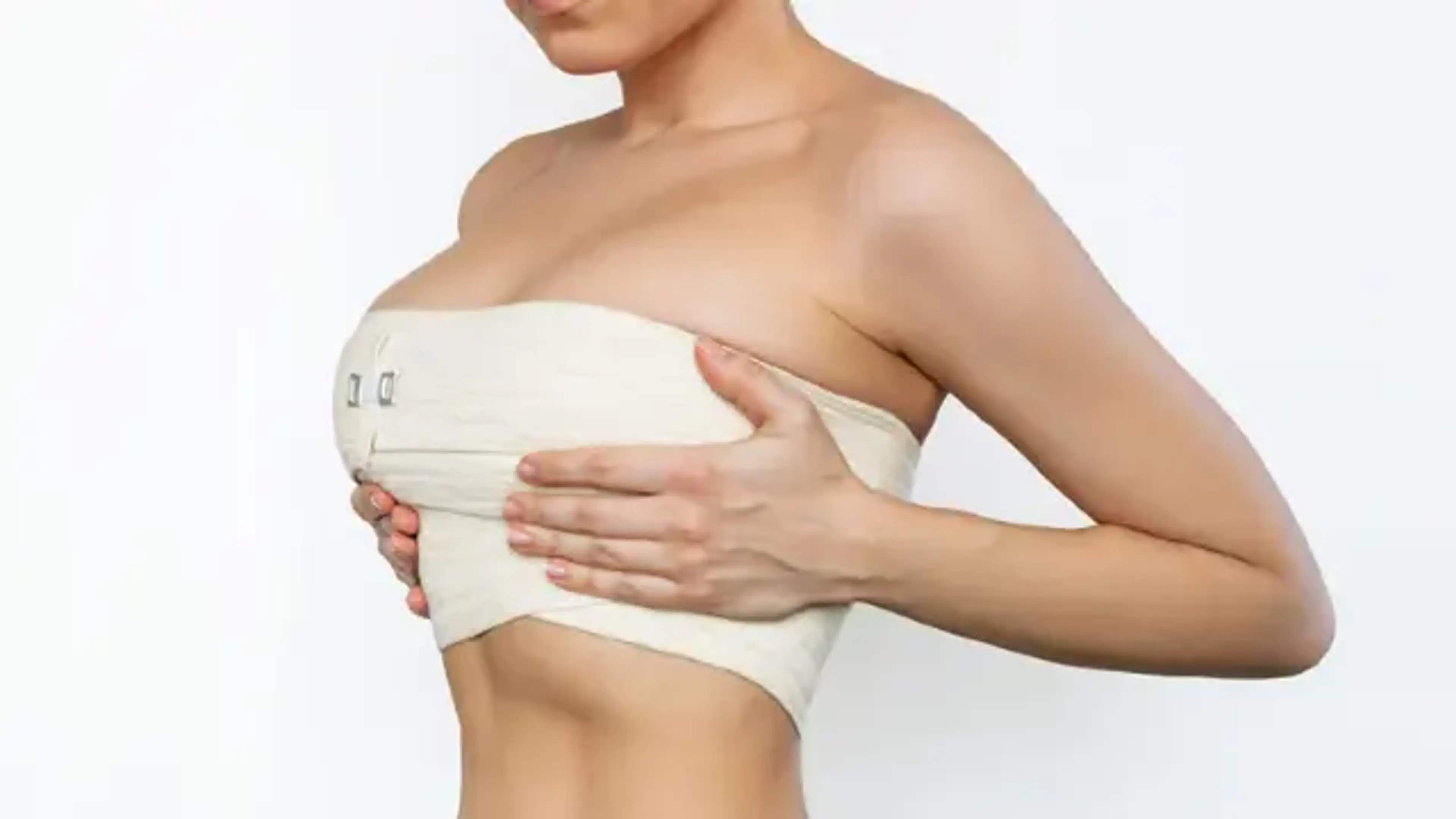
You will feel tight and sore, similar to the feeling of a very intense chest workout. You must wear a specialized compression bra 24/7 to keep the implants in place. Most patients take this week off from work to rest.
Initially, implants sit very high on the chest and can look somewhat "pointy" or unnatural. Over 3 to 6 months, the chest muscles relax, and the implants settle into a lower, more natural position. This is known in the patient community as the Drop and Fluff phase.
To ensure the final result is perfect, many clinics provide post-operative care packages. These often include laser treatments and medical-grade silicone sheets to fade scars as quickly as possible.
Your results depend entirely on the skill and experience of your surgeon. When looking for a provider, consider the following:
Ensure your surgeon is Board Certified in Plastic Surgery. Inquire about their revision rates and how many breast augmentations they perform every week. A surgeon who specializes specifically in breasts will always have a more refined technique than a generalist.
Look at before and after photos of patients who have a similar body type, height, and starting breast size to yours. If you want a natural look, look for a surgeon whose portfolio reflects teardrop shapes rather than extremely high-projection round results.
Most modern implants are designed to last 10 to 15 years. While they are high-quality devices, they are not considered lifetime devices. You should have them checked periodically by a professional to ensure they are still in good condition.
You will feel significant pressure and soreness for the first 3 to 5 days, often described as "extreme muscle soreness." This is usually well-managed with prescribed pain medication and rest.
You will see a change immediately, but the "final" shape is usually visible between 3 and 6 months post-op. This is when the swelling has fully subsided and the implants have settled into their natural position.
Yes. Most women with implants can breastfeed successfully. Choosing a submuscular placement is generally the best way to ensure the milk ducts and nerves remain unaffected by the surgery.
South Korea is widely considered the best and cheapest destination. It offers cutting-edge technology like HD Endoscopy and 3D simulation as standard practice, ensuring higher precision and safety at a lower cost than in Western countries.
If you have a desk job, you can usually return within 5 to 7 days. If your job involves heavy lifting or high levels of physical activity, you should wait at least 3 to 4 weeks before returning to full duties.