Home / Articles
How to Prevent Complications After Breast Augmentation Surgery
Home / Articles
How to Prevent Complications After Breast Augmentation Surgery
Breast augmentation may seem like a single decision: implants or no implants. But the reality is far more nuanced. For many women, this surgery represents a journey toward body confidence, symmetry, or restoration after life events like childbirth or weight loss. Yet what often goes unspoken is that the success of this procedure hinges just as much on what happens after surgery as during it. At Human PS Clinic, we’ve seen time and again: even a flawless surgery can suffer if aftercare is ignored.
To prevent complications after breast augmentation, you need to support your body’s healing process with the same care and commitment that led you to the operating table in the first place. Healing isn't passive — it's strategic, delicate, and deeply individual. In this guide, we’ll walk you through why complications occur, how to reduce your risks, and the habits that will protect your investment in your body and confidence.
Complications after breast augmentation are often misunderstood. To the outside world, any problem that occurs post-surgery might be seen as a “surgical error” — but in reality, the human body is incredibly complex, and healing isn’t something that can be micromanaged to perfection.
There are two types of factors influencing complications:
It’s also important to know that breast implants are foreign objects. Your body naturally responds by forming a capsule around them. In some cases, this capsule becomes too tight (capsular contracture). In others, an unnoticed trauma can cause a shift in implant position. These aren’t “failures” — they’re part of the ongoing conversation between your body and the device.
At Human PS Clinic, we never frame complications as shameful. Instead, we educate patients about:
Ultimately, preventing complications is not about eliminating all risk — it’s about creating the best environment for healing, and responding quickly and wisely when the body signals something unusual.
Every reputable plastic surgeon — especially those who, like Dr. Kim at Human PS Clinic, tailor procedures for each patient — will provide detailed aftercare guidelines. These aren’t suggestions. They’re your best defense against complications.
Typical instructions include:
How long to wear compression garments
When and how to shower
Medication schedules
Restrictions on lifting your arms or objects
Follow-up appointment timing
Failing to follow these can put unnecessary strain on healing tissue and raise your risk of implant displacement or infection.
Even seemingly minor lapses — like sleeping on your side too early or forgetting to wear your compression garment during the day — can affect the final result. Healing is a period of precision.
Tobacco and alcohol are enemies of healing. Nicotine constricts blood vessels, reducing oxygen delivery to tissues. Alcohol can thin the blood and increase the likelihood of bleeding and swelling. Both also increase your risk of infection and poor scar healing.
Hot tubs, saunas, and swimming pools — tempting as they are — can expose fresh incisions to bacteria or cause inflammation.
Most surgeons recommend avoiding:
Smoking for at least 4–6 weeks post-op
Alcohol for 1–2 weeks minimum
Saunas, spas, and pools for at least 3–4 weeks or until incisions are fully closed
Healing tissue is delicate. Give your body the full chance to recover without exposure to risk factors.
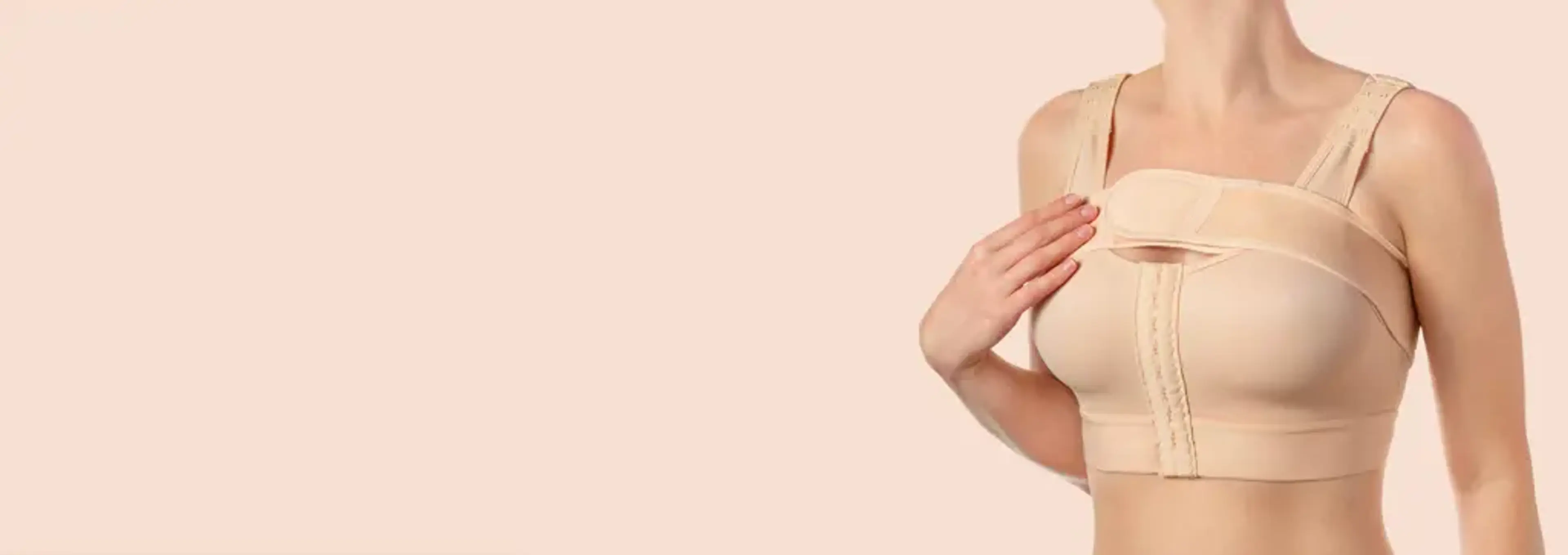
Post-surgical compression garments support your breasts while they settle into their new shape. They help reduce swelling, prevent implant displacement, and encourage proper circulation.
A mistake patients often make is switching to underwire bras too early, which can irritate incisions or distort breast shape. Underwires press on the inframammary fold (the area under the breast), which is often involved in the incision — placing pressure there can delay healing or cause scarring problems.
Stick to what your surgeon recommends — usually a compression bra or soft, supportive sports bra for 4–6 weeks. Some patients may need longer support depending on implant size or placement.
In the first few weeks, your chest needs to stay calm. Even small, habitual movements — reaching up to grab a mug, lifting a child, pushing a heavy door — can stretch healing tissue. The internal stitches, even if absorbable, are still stabilizing the pocket around the implant. Disrupting this can lead to asymmetry or malposition.
Guidelines often include:
No heavy lifting for 4–6 weeks
No high-impact exercise (like running) until cleared
Avoid raising your arms above your head initially
This might sound excessive — but it’s preventative medicine. Healing is not just about rest — it’s about restraint.
Here’s something honest: the “Instagram-ready” results you see just weeks after surgery are only half the story. Your breasts will continue to evolve for months — the implants settle, tissues soften, scars fade.
And even the best procedure can age poorly if you’re not checking in over time.
At Human PS Clinic, we often advise patients:
Don’t disappear after your final follow-up. Come in yearly.
Self-check monthly: look, feel, and note changes in symmetry, softness, or sensitivity.
If anything feels off — tightness, discomfort, hardening — don’t wait. Earlier is always better.
Implants are not lifetime devices. Most are designed to last 10–15 years, but your body may respond differently. Trust your intuition — and trust your clinic.
Some of the signs of trouble may be subtle: a slight change in position, a new firmness, a twinge of pain when pressing. These are all valid reasons to reach out. There is no such thing as being “too cautious” when it comes to breast health.
Great outcomes start long before the operating room. They start with a surgeon who listens, tailors, and plans — not just performs. At Human PS Clinic, our approach to breast augmentation includes:
In-depth consultations that match implant type and size to your anatomy and lifestyle
Meticulous surgical technique using HD endoscopy for better precision and less trauma
Thoughtfully customized recovery protocols based on your healing profile
Ongoing care — from first consultation to long-term implant monitoring
We also counsel patients on the emotional component of recovery. Changes in body image, anxiety about healing, or concern over symmetry — these are natural parts of the journey. At our clinic, you’re supported not just medically, but holistically.
If you’ve already had surgery, revisit your aftercare instructions and stick to them. Remind yourself that healing isn’t linear. There will be good days and uncomfortable ones — but they are all part of the process.
If you’re preparing for breast augmentation, ask your surgeon detailed questions about recovery, risks, and follow-up. Bring a list. Take notes. The right clinic will never make you feel rushed.
And if you’re still searching for the right clinic, prioritize those that treat you as a whole person — not just a surgical candidate. Precision, compassion, and patient-first planning are not just ideals. They’re protective.
At Human PS Clinic, we believe beautiful results come from the fusion of art, science, and trust. We don’t just operate. We accompany.