Home / Articles
Rhinoplasty for Crooked Nose: How to Achieve Facial Symmetry
Home / Articles
Rhinoplasty for Crooked Nose: How to Achieve Facial Symmetry
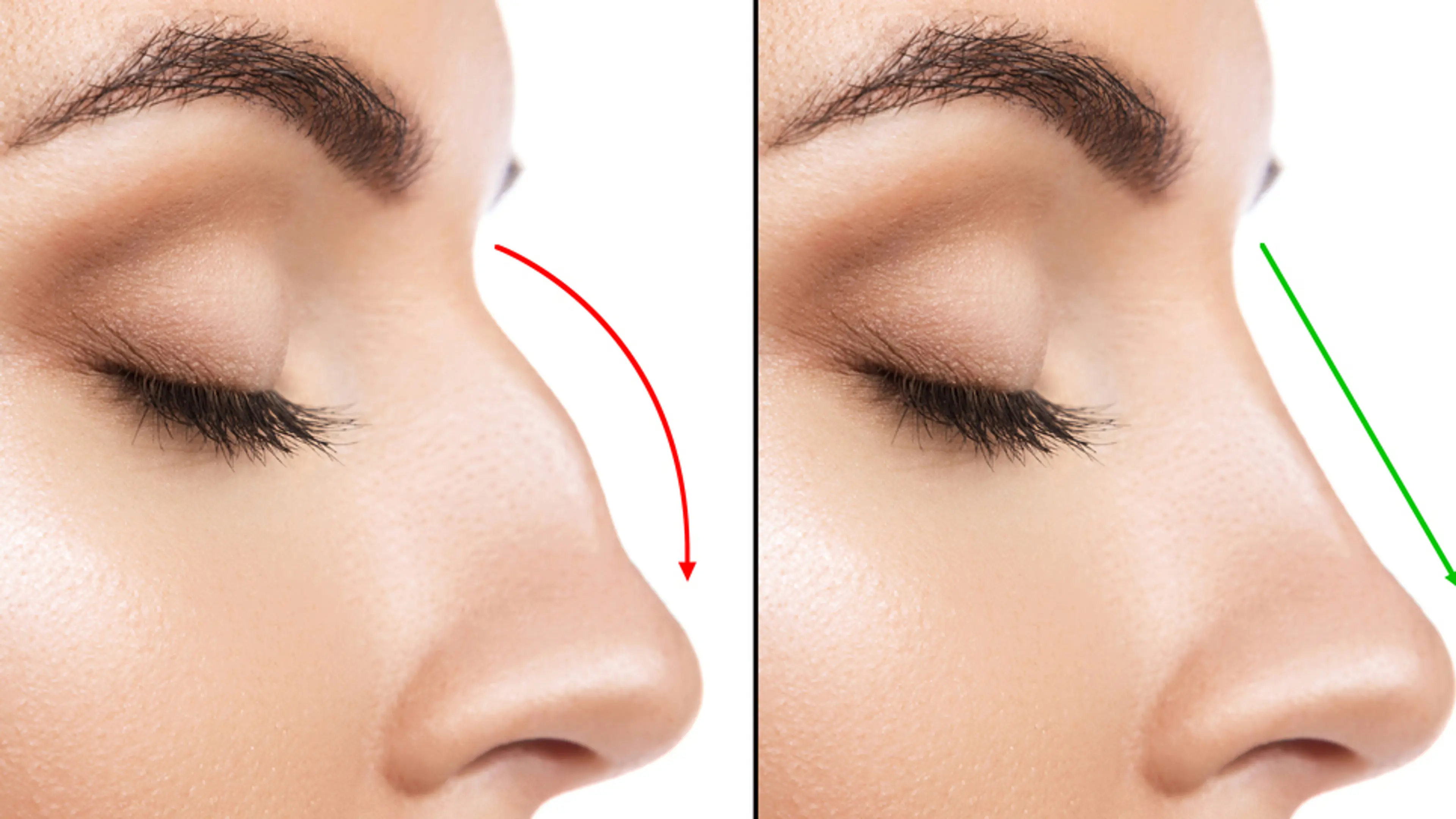
Have you ever looked at a group photo and thought, “Why does my nose look so off compared to the rest of my face?” You’re not imagining it. A crooked nose is one of the most common concerns patients bring to plastic surgeons, and it can have a surprisingly powerful effect on overall appearance.
Unlike a small blemish or uneven skin tone, a crooked nose sits at the very center of the face. It doesn’t just stand out—it can make the entire face feel imbalanced. For some people, this comes from genetics. For others, it’s the result of an old injury or a deviated septum. Whatever the cause, the emotional weight is often the same: feeling like no matter how polished your look is, something still feels “off.”
At Human PS Clinic in Gangnam, Seoul, we meet many patients who have carried this worry for years. Some even adjust the way they pose for photos or avoid close-up shots altogether. What they want isn’t a brand-new identity—it’s alignment, balance, and confidence in their natural self. That’s where rhinoplasty for a crooked nose can make a profound difference.
When patients come to our clinic worried about a crooked nose, what they’re often really describing is a loss of balance. Humans are naturally drawn to symmetry — not because we’re obsessed with perfection, but because the brain processes balanced features as more harmonious and approachable.
Research in psychology and neuroscience shows that people often judge symmetrical faces as more attractive, trustworthy, and even healthier. It’s not about exact mathematical equality — no one has a perfectly symmetrical face — but rather about how well the central features align. When the nose, which sits right in the middle, is noticeably tilted, it pulls the viewer’s attention away from the rest of the face.
One patient once told us: “Even if my eyes look good, all I see in photos is how my nose points to the left.” That’s a powerful example of how a single feature can influence someone’s entire self-image.
Think of the nose as the “keystone” of the face. Just as a slightly tilted picture frame on a wall makes the whole room feel off, a crooked nose can make otherwise balanced features appear uneven. Even small deviations — a mild tilt or bump — can affect how the eyes and lips are perceived in relation to each other.
What people often overlook is that facial symmetry isn’t purely about beauty. It’s also about expression. An unbalanced nose can sometimes make a person appear tense, serious, or even less open than they actually are. When the nose is straightened and facial balance is restored, patients often notice that they look more approachable and calm — even when their personality hasn’t changed at all.
At Human PS Clinic, we emphasize this distinction. Rhinoplasty for a crooked nose isn’t about creating a “perfect” face. It’s about restoring natural balance so that the world sees you the way you feel inside.
Not all crooked noses are the same. Understanding the underlying cause is crucial because it determines how surgery should be planned. At Human PS Clinic, we evaluate four main categories:
What’s important to highlight is that each cause requires a tailored solution. A traumatic injury may require controlled bone fractures (osteotomies) to reset alignment, while a deviated septum might demand internal reshaping and reinforcement. This is why rhinoplasty for a crooked nose is considered one of the most technically demanding forms of nasal surgery.
Correcting a crooked nose goes beyond surface adjustments. A surgeon has to balance structure, function, and aesthetics all at once. At Human PS Clinic, Dr. Kim Kook Hyun approaches each case with precision techniques that focus on long-term stability and natural integration.
If the nasal bones themselves are tilted, controlled micro-fractures are made to reposition them into a straighter line. This step requires surgical finesse—too aggressive, and the structure weakens; too conservative, and the nose remains unbalanced.
Cartilage often plays a big role in crooked noses. Uneven growth or past injury can cause one side to collapse or protrude. By reshaping or grafting cartilage, the surgeon restores balance and prevents the nose from drifting back into asymmetry over time.
For patients with a deviated septum, functional correction is combined with aesthetic reshaping. This ensures not only a straighter appearance but also smoother airflow and improved breathing.
Sometimes, the best way to keep the nose stable is to add supportive grafts—often taken from the patient’s own cartilage. This acts like scaffolding, maintaining symmetry long after the surgery heals.
At Human PS Clinic, advanced 3D imaging and custom surgical planning allow patients to preview how adjustments will influence their overall facial balance. This technology helps bridge the gap between expectation and reality, ensuring results that feel both precise and personal.
In the past, rhinoplasty in Korea often followed a “signature look” trend: high bridges, narrow tips, and dramatic reshaping. But over the past decade, a cultural shift has emerged. Patients now prioritize natural beauty—noses that blend seamlessly with their unique facial proportions rather than standing out as obviously surgical.
This is especially true for crooked nose corrections. Most patients don’t want a “brand-new nose.” Instead, they want their existing features to look aligned and harmonious. At Human PS Clinic, we hear this request often: “I just want my nose to look straight without anyone knowing I had surgery.”
Dr. Kim’s philosophy reflects this trend. By focusing on subtle refinements rather than aggressive alterations, he ensures that patients leave with results that feel like an authentic part of their face—not a surgical addition.
Healing after crooked nose rhinoplasty follows a predictable timeline, though patience is key:
Many patients are surprised at how quickly their facial impression changes. Even within the first month, the straightened nose often highlights their eyes, softens their jawline, and brings a sense of harmony they may have never experienced before.
A crooked nose isn’t just a cosmetic issue—it often involves structural complications. Correcting it requires a surgeon with both technical expertise and artistic sensibility. If function is ignored, patients may end up with breathing issues. If form is rushed, the result may look unnatural or unstable over time.
This is why experience matters. At Human PS Clinic, Dr. Kim Kook Hyun combines:
This blend of skill and compassion is what has made Human PS Clinic a trusted destination for both local and international patients seeking transformative yet authentic results.
A crooked nose is more than a cosmetic detail—it can disrupt how you see yourself and how others perceive you. Straightening it through rhinoplasty is not about chasing perfection, but about restoring balance and allowing your true features to shine.
At Human PS Clinic, we believe that every patient deserves results that feel natural, harmonious, and deeply personal. Whether your crooked nose is the result of genetics, an old injury, or a deviated septum, the right surgical approach can transform not just your face, but your confidence.
If you’ve been considering rhinoplasty for a crooked nose, a consultation with Human PS Clinic in Gangnam may be the first step toward rediscovering balance—both in your appearance and in the way you carry yourself.