Home / Articles
The Best Breast Augmentation Solutions for Different Body Types
Home / Articles
The Best Breast Augmentation Solutions for Different Body Types
There’s a quiet turning point many patients describe — that moment when they wonder whether their silhouette could feel a little more balanced, not dramatically different, just more themselves. Breast augmentation, when approached thoughtfully, isn’t about chasing size or trends. It’s about creating harmony with the body you already have.
At Human PS Clinic in Gangnam, we’ve spent more than a decade refining techniques that respect each patient’s uniqueness. Dr. Kim Kook Hyun often reminds us that every body type has its own logic, its own architecture. The “best” breast augmentation is never a one-size-fits-all answer; it’s a tailored solution shaped by your proportions, your lifestyle, and the natural lines of your frame.
If you’ve ever wondered what kind of augmentation suits your body — whether you’re petite, athletic, curvy, or beautifully in-between — you’re exactly the kind of reader we wrote this for.
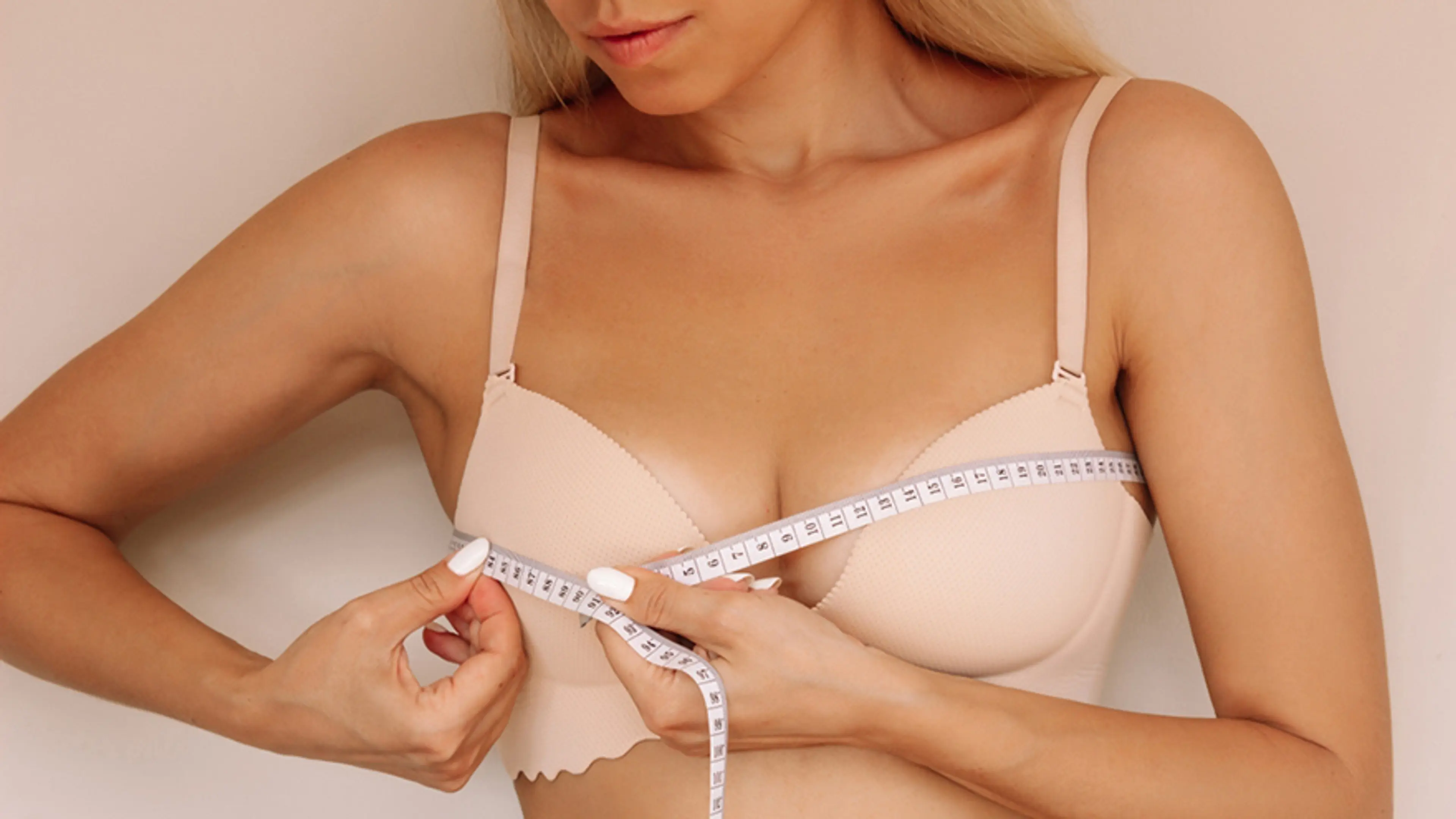
To be honest, cup size is one of the least useful numbers in breast surgery planning. What really matters is relationship: shoulder width to breast width, ribcage curvature, waist contour, and the natural slope of your upper pole.
Think of breast augmentation like architectural design. You wouldn’t enlarge just one part of a house facade without checking the structural lines — otherwise the renovation looks “added on” instead of naturally designed. The same applies to the human body.
At our clinic, we use HD endoscopic visualization to study the internal spaces of the chest wall with precision, allowing Dr. Kim to choose the implant placement and pocket shape that fit your natural structure — not a generic ideal.
Rather than the old-fashioned body-type categories, surgeons pay attention to three practical characteristics:
Different combinations of these characteristics lead us to different augmentation solutions.
Many petite patients worry they’ll appear “top-heavy” or unnatural. What people often overlook is how even a modest implant can create elegance if chosen correctly.
When there’s limited chest width, we design the implant pocket in a way that avoids extending the breast too close to the armpit or midline. Dr. Kim often says, “A small frame doesn’t need small volume — it needs smart volume.”
Women with athletic torsos — defined pectoral muscles, low body fat, tight skin — have unique challenges. The muscle may push the implant laterally, and thin tissue coverage may reveal borders unless placed carefully.
In athletic candidates, we spend extra time evaluating how your chest behaves during movement. One of Dr. Kim’s lesser-known techniques involves customizing the pectoral muscle release based not on a standard pattern but on your individual muscle thickness seen during endoscopic visualization. This reduces the risk of the implant shifting during workouts.
Curvy patients usually have a wider chest base, fuller hips, and a natural S-line. For them, the goal is often harmony rather than extra volume.
Curvier patients often request larger sizes, but the real art lies in shaping the transition from the chest to the waist. An implant that’s too wide decreases the waist-to-bust contrast. The right one enhances it.
A wide ribcage can make even a reasonably sized breast appear smaller. Many patients with this structure assume they need a large implant, but that’s not always true.
Creating natural cleavage on a wide chest requires not size but precision. At Human PS Clinic, endoscopic tools allow Dr. Kim to shape the pocket with millimeter-level accuracy, which is critical to avoid implants drifting apart over time.
Everyone has asymmetry; some simply notice it more. True asymmetry can involve differences in rib height, breast mound shape, or nipple position.
Perfect symmetry doesn’t exist, even after surgery. What surgeons aim for is harmony visible in motion, not just in still photography.
Fat grafting is beautiful in concept — using your own tissue to enhance shape — but it’s not for every anatomy.
Patients with enough donor fat (hips, thighs, abdomen)
Those seeking subtle, soft-volume enhancement
Individuals wanting to refine implant results (hybrid method)
Very lean individuals
Patients wanting a significant size increase
Those with limited skin elasticity
At Human PS, we often combine both in a hybrid approach because it creates the most natural décolletage — the kind that looks effortless even without a bra.
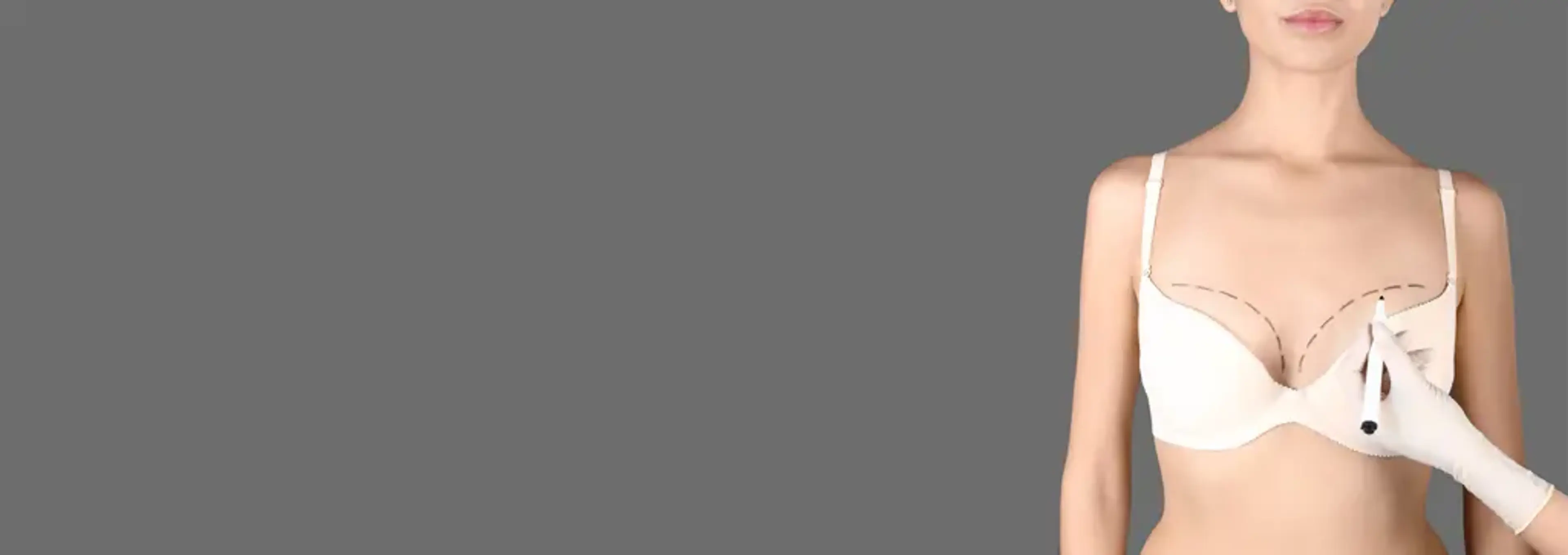
Every surgical plan begins long before the operating room. Our process includes:
The hallmark of Dr. Kim’s approach is restraint. Not minimalism — restraint. Knowing when not to enlarge, when to shift focus, when to support the tissue rather than stretch it. These are the small decisions that create natural results.
Patients often tell us, “It looks like it was always supposed to be this way.” That’s the goal.
Choosing the right breast augmentation isn’t about choosing an implant first — it’s about choosing yourself. Your proportions, your comfort, your long-term aesthetic. When your procedure matches your body type, the result doesn’t look surgical; it looks effortlessly natural, as though it always belonged.
That’s why, at Human PS Clinic, we emphasize precision over volume and personalization over trends. With HD endoscopic techniques, advanced planning, and a genuinely patient-first approach, Dr. Kim and our team create results that feel both elegant and enduring.
If you’re considering breast augmentation — or simply want to understand which approach suits your body type — you’re always welcome to visit us for a consultation. We’re here to help you explore your options with clarity, honesty, and the kind of careful attention every patient deserves.